
Fruit Concentrates in Modern Beverages: New Opportunities for Manufacturers
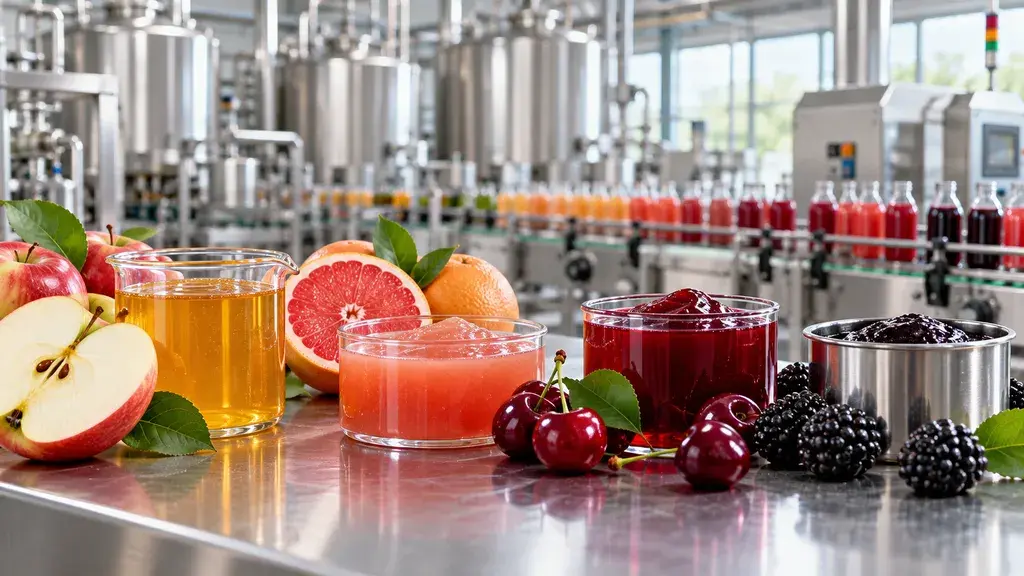
The beverage market is becoming increasingly diverse. Alongside juices and nectars, consumers are choosing fruit and berry blends, combinations with herbs, plant-based beverages, and products with unusual flavours. Manufacturers need formulations that maintain the intended flavour profile when production is scaled up. This is why the fruit concentrates for beverages offered by our company in Uzbekistan are in high demand when their characteristics meet the requirements of a particular production process.
Ingredients for beverage production are selected based on more than taste alone. Acidity, colour, stability during processing, and compatibility with other components are also important. Food technologists assess how a fruit base behaves after blending, pasteurisation, and storage, as well as how consistently the results can be reproduced from batch to batch. Let us take a closer look at the opportunities that concentrates offer beverage manufacturers.
How Beverage Formats Are Changing
Modern formulations are increasingly built around flavour combinations. Apple can soften the perception of acidity, grapefruit adds bitterness, while cherry or blackberry creates a richer flavour profile. Fruit bases are also combined with botanical extracts, tea, or spices. Even a small change in proportions can affect the balance of the finished beverage.
Concentrates for beverage manufacturers make it possible to develop different product variations using raw materials with agreed specifications. Before launching a formulation, the product development team should determine:
-
What flavour profile is required and which fruits will create it.
-
How the ingredient affects acidity, colour, and sweetness.
-
Whether its properties remain stable after processing and storage.
-
Whether the concentrate is compatible with other components and production equipment.
-
Which parameters should be checked when receiving each batch.
Fruit ingredients for manufacturing are used in both traditional and blended beverages, as well as plant-based formulations. Acidity, colour, and soluble solids content can affect the appearance and stability of a blend, so it is important to check ingredient compatibility in advance.
Why Fruit Concentrates Remain a Convenient Raw Material
The concentrated format makes it possible to transport and store less water compared with the original juice, simplifying industrial logistics. When proper storage conditions are maintained, the raw material can be used as needed, allowing purchases to be planned around production schedules. The natural beverage concentrates we offer our customers in Uzbekistan are suitable for companies that need to agree on supply volumes in advance. When selecting raw materials, it is worth clarifying:
-
The type of fruit and the intended application of the concentrate.
-
The parameters confirmed by product specifications and documentation.
-
Storage conditions, packaging, and shelf life.
-
The possible order volume and shipment schedule.
-
The procedure for agreeing on product parameters and handling deviations.
Concentrates help standardise the production process, but they do not eliminate the need for quality control. Product characteristics depend on the type of raw material, processing technology, and harvest season. Carefully selected fruit and its natural aroma do not, by themselves, guarantee identical results: each batch must comply with the agreed specification. To maintain a consistent flavour, manufacturers check concentration, acidity, colour, and organoleptic properties and, when necessary, conduct tests within the actual formulation.
Where Juice Concentrates Are Used
Raw materials for juice production are used to manufacture juices, nectars, fruit drinks, and blended beverages. A concentrate can form the fruit base, complement the flavour, or help standardise characteristics across batches. An apple base provides a milder profile, while citrus ingredients offer a fresh taste and pronounced acidity. The specific application depends on the requirements for the finished product and the company's production technology.
A juice concentrate manufacturer should provide sufficient information to evaluate the raw material before purchase. It is important to consider how the ingredient behaves after processing and during storage. Beverages containing pulp and clear beverages may require different solutions. Fruit puree, concentrated juice, and fruit blends cannot be used interchangeably without technological testing.
Fruit components are also used in related product categories. They can serve as fillings or fruit preparations in desserts where a berry or creamy flavour profile is desired, and they can also be used in the production of confiture. Raw materials should be selected according to their intended application rather than solely by the name of the fruit.
Concentrate Supplies for Beverage Manufacturers
For B2B customers, consistent quality, agreed delivery times, and the ability to plan purchases are essential. As one of the leading concentrate suppliers in Uzbekistan, we discuss the intended use of the raw material, its characteristics, volumes, and shipment conditions with customers in advance. For regular cooperation, it is also useful to agree on product specifications and incoming quality control procedures.
Concentrated Juice & Puree produces concentrated juices and purees. Since 2019, the company has been exporting fruit concentrates. Production is planned according to orders: volumes and shipment recipients are agreed upon at the beginning of the season. Products are manufactured using equipment from Europe, Turkey, and China in accordance with applicable interstate standards. Raw material specifications and order conditions are agreed separately.
When discussing wholesale supplies of concentrated juices, prepare information about the required volume, intended application of the ingredient, purchasing schedule, and product requirements. This will help assess supply capabilities and determine which characteristics need to be confirmed before cooperation begins. Reliable partnerships are based on transparent documentation, clear agreements, and consistent communication. Ensuring that the finished beverage is safe for consumption requires compliance with production technology and raw material quality requirements.